Windows 10 CBB Support

With Windows 10 we saw the introduction of branches controlling how frequently you want to receive feature updates. The Current Branch for Business allows you to defer updates but only two CBB versions are supported at any time so you do have to install the updates at some point. Microsoft announce that the latest CBB build (1607) is available in the VLSC on 26 January, 2017 and thus the grace period for the original CBB build (1507) begins and it will no longer be serviced after May 2017.

Read the announcement here: http://bit.ly/2laW8fu.

Windows 10 and CSP

If you buy a Windows 10 Enterprise E3 or E5 User Subscription Licence through the Cloud Solution Provider (CSP) program then you need Windows 10 Pro Anniversary Edition on your device before the enterprise functionality can be enabled.

In January 2017 Microsoft relaxed the rules for the other devices (up to 4 more) that you might want to use: while they still need the Pro edition you can upgrade to Windows 10 free of charge from Windows 7 or Windows 8.1. What’s more, if you stop paying your subscription then ALL devices revert to Windows 10 Pro with perpetual use rights.

Windows 10 Enterprise is also part of Secure Productive Enterprise so these enhancements apply if you’re licensed for SPE E3 or E5 too.

See the Microsoft announcement here: http://bit.ly/2jOimqv.

Microsoft Hosting and CSP Newsletter

The December 2016 Hosting and Cloud Service Provider Newsletter is out. There’s just one item of licensing interest: the SPLA agreement will be refreshed in February 2017 with two small amendments – there’s a new primary place of business field, and notices sent to Microsoft no longer need to be copied to the legal department.

Sign up for this free newsletter here: http://bit.ly/2gbk5iR.

December 2016 Azure Hybrid Use Benefit Datasheet

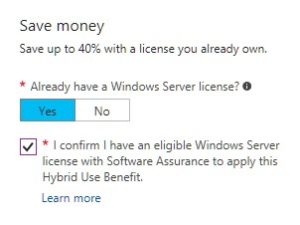
The Azure Hybrid Use Benefit datasheet is updated to cover both Windows Server 2012 R2 Processor-based licences and Windows Server 2016 Core licences, as well as for the availability of Windows Server images that can be chosen to deploy a VM with this benefit.

Find this datasheet in the Core Infrastructure section of our Licensing Guides emporium: http://bit.ly/MSLicensingGuides.

Azure and the MPSA

Microsoft announce that from 1 February 2017 new customers will not be able to buy Azure consumption services through the MPSA, but confirm that existing customers are unaffected.

Advice to partners is that they should recommend the Cloud Solution Provider (CSP) channel for any new pay-as-you-go Azure customers going forward.

Read the blog post here: http://bit.ly/2j0dACN.

Enterprise Agreement Program Guide

There’s an updated (December 2016) Enterprise Agreement Program Guide which has primarily been adjusted for the renaming of Enterprise Cloud Suite to Secure Productive Enterprise.

Find this updated guide here: http://bit.ly/MSLicensingGuides.

System Center

The System Center 2016 Client Management Suite is removed from the January 2017 Product Terms document, and now each of its four components are licensed separately with CMLs per User or per OSE.

The four components are Data Protection Manager, Operations Manager, Orchestrator, and Service Manager and active SA on a Client Management Suite licence at 1 January 2017 makes you eligible for all four licences.

See page 6 of the Product Terms for an overview.

January 2017 Product Name Changes

The January 2017 Product Terms document alerts us to some product name changes: Office 365 Advanced eDiscovery becomes Office 365 Advanced Compliance, and Operations Management Suite changes to Operations Management and Security – it’s all on page 5.

Dynamics 365 (On-premises) Licensing Guide

The Dynamics 365 (On-premises) Licensing Guide is available.

It’s got useful information on the new offerings available, as well as upgrade and downgrade paths, and how you can transition to the cloud. As usual, find this guide at http://bit.ly/MSLicensingGuides.

Visual Studio TFS and Team Services

In November 2016 there were changes made to release management licensing in Visual Studio Team Foundation Server and Team Services.

If you want to understand how concurrent pipelines are licensed (and indeed what they are!) then these are some good resources: a video – http://bit.ly/2j1rMKt, and blog entries for TFS – http://bit.ly/2iweV67 and TS – http://bit.ly/2j5CPGn.